Bridgestone Tyre Size Guide: Speed Rating, Load Index and Size Meaning
Quick answer
A tyre size such as 225/55 R18 98V means 225 mm wide, a sidewall 55% as tall as that width, radial construction and an 18-inch rim. 98 is the load index (750 kg per tyre) and V is the speed rating (240 km/h). Always match or exceed the ratings on your door placard.
Key takeaways
- Read the size left to right: width (mm), aspect ratio (%), construction (R), rim (inches), load index, speed rating.
- The speed rating is a letter: H = 210 km/h, V = 240 km/h, W = 270 km/h, Y = 300 km/h.
- The load index is a number: 98 = 750 kg per tyre, 116 = 1,250 kg per tyre.
- Never fit a lower load index or speed rating than the car maker specifies.
- XL means extra load, LT and C mean light-truck and commercial construction, and RFT means run-flat.
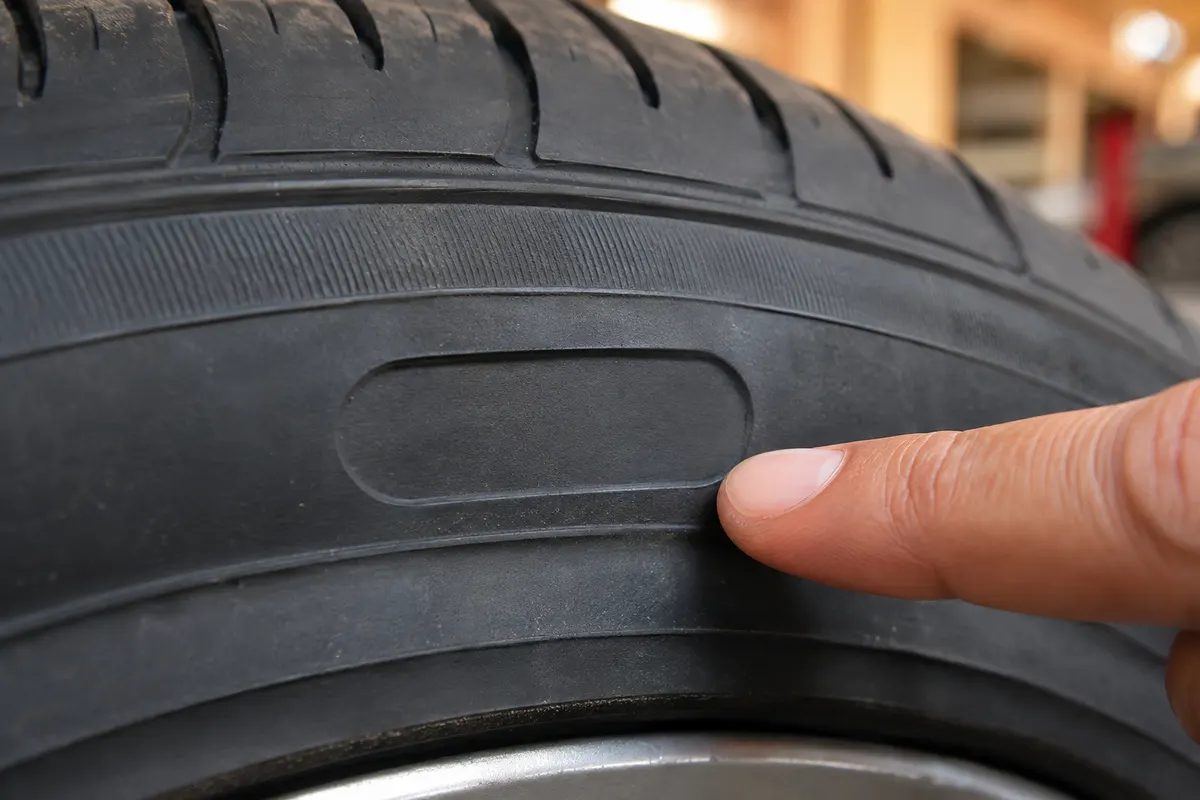
Most tyre questions I get on WhatsApp start with a photo of a sidewall and the words "what size is this?". The answer is always there in one line of characters, and once you know how to read it you can check a quote, compare two tyres or spot a wrong fitment in seconds. The two parts people find hardest, the load index and the tyre speed rating, are also the two that matter most for safety.
This guide decodes a full Bridgestone size step by step, gives you the standard load index and speed rating tables, and explains the extra markings like XL, LT, C and RFT. The DOT date, which sits on the same sidewall, has its own guide: how to read the Bridgestone DOT date code.
What does a tyre size like 225/55 R18 98V mean?
Every part of a tyre size like 225/55 R18 98V describes one measurement, read from left to right. Here is how that common mid-size SUV size breaks down:
Put together, the 55% sidewall on a 225 mm tyre is about 124 mm tall, and the whole tyre stands roughly 705 mm high. That overall diameter is what the speedometer, ABS and stability control are calibrated to, which is why size changes need care.
- 225: section width in millimetres, sidewall to sidewall
- 55: aspect ratio, the sidewall height as a percentage of the width
- R: radial construction, used on virtually every modern car tyre
- 18: rim diameter in inches
- 98: load index, 750 kg maximum per tyre
- V: speed rating, 240 km/h maximum
What is a tyre speed rating?
A tyre speed rating is the letter after the load index that shows the maximum speed the tyre can sustain at its rated load. It is tested under controlled conditions, so it is a ceiling, not a target, and it falls as the tyre ages, wears or runs under-inflated.
The standard letters for car and SUV tyres are listed below. Most family sedans in the UAE leave the factory on H or V; SUVs such as the Land Cruiser and Patrol usually run H; and performance cars like a Porsche 911 or Mercedes-AMG need W or Y. You will also see ZR in the size itself, for example 245/35 ZR20, which means the tyre is rated above 240 km/h, with the exact limit given by the letter after the load index.
In the UAE the speed rating also tells you something about heat tolerance. A higher-rated tyre is built to manage the heat generated at speed, which matters on long E11 runs in August. For high-speed cars, ranges such as the Bridgestone Potenza S007 carry Y ratings in most sizes.
- Q = 160 km/h
- R = 170 km/h (common on light-truck and van tyres)
- S = 180 km/h
- T = 190 km/h
- H = 210 km/h
- V = 240 km/h
- W = 270 km/h
- Y = 300 km/h; (Y) in brackets = above 300 km/h
| Load index | Max load (kg) | Load index | Max load (kg) |
|---|---|---|---|
| 88 | 560 | 105 | 925 |
| 89 | 580 | 106 | 950 |
| 90 | 600 | 107 | 975 |
| 91 | 615 | 108 | 1,000 |
| 92 | 630 | 109 | 1,030 |
| 93 | 650 | 110 | 1,060 |
| 94 | 670 | 111 | 1,090 |
| 95 | 690 | 112 | 1,120 |
| 96 | 710 | 113 | 1,150 |
| 97 | 730 | 114 | 1,180 |
| 98 | 750 | 115 | 1,215 |
| 99 | 775 | 116 | 1,250 |
| 100 | 800 | 117 | 1,285 |
| 101 | 825 | 118 | 1,320 |
| 102 | 850 | 119 | 1,360 |
| 103 | 875 | 120 | 1,400 |
| 104 | 900 | 121 | 1,450 |
What is a tyre load index?
The tyre load index is a number from a standard chart that gives the maximum weight one tyre can carry at its correct pressure. A load index of 98 means 750 kg per tyre, so a set of four can carry 3,000 kg, which has to cover the car, passengers, luggage and any roof load.
The chart is not linear, so you cannot do the maths in your head; use the table below. Big SUVs need much higher figures. A Land Cruiser size such as 265/65 R18 116H is rated at 1,250 kg per tyre, and highway tyres like the Bridgestone Dueler H/T 840 are built around those heavier loads.
The load index only holds at the right pressure, which is set out in the Bridgestone tyre pressure guide for the UAE. A tyre that is 6–8 PSI low cannot carry its rated load safely, and in summer heat that is the setup behind many failures on fully loaded family SUVs heading to Oman for the Eid break.
Can you fit a lower load index or speed rating?
You should never fit a tyre with a lower load index or speed rating than the car maker specifies on the door placard or in the owner's manual. A lower load index means the tyre can be overloaded in normal use, and a lower speed rating means it may not cope with the heat of sustained highway speeds.
It can also cause problems beyond safety. An inspection centre or an insurer may treat under-rated tyres as unsuitable, and on a claim after an accident that is a conversation nobody wants to have.
Going higher is fine. A V-rated tyre on a car specified for H, or a 100 load index where 98 is required, is a safe upgrade. When we quote, we always match or exceed the original ratings, and if a cheaper option would mean going lower, we tell you and do not fit it.
What do XL, LT, C and RFT mean on a tyre?
XL stands for extra load: the tyre has a reinforced construction that carries more weight than a standard tyre of the same size, at a higher inflation pressure. You will often see it on SUV and large-sedan sizes, and it is important to inflate an XL tyre to the placard figure for XL, not a standard-load figure.
LT at the start of a size, such as LT265/75 R16, marks a light-truck tyre with stiffer sidewalls for pickups and heavy-duty 4x4s; the Bridgestone Dueler M/T 674 is offered in LT sizes. A C after the rim size, such as 195 R15C 106/104R, marks a commercial tyre for vans, and the two load numbers are for single and dual rear-wheel use. Van tyres such as the Bridgestone Duravis R660 use this format.
RFT means Run-Flat Technology: reinforced sidewalls that carry the car for a limited distance after a puncture, common on BMW and some Mercedes-Benz and Lexus models. Bridgestone also makes Turanza DriveGuard, a run-flat for cars that were not originally built for RFT, which can cover about 80 km at up to 80 km/h after a puncture. You may also see car-maker approval marks, such as a star for BMW or MO for Mercedes-Benz.
Where do you find the right tyre size for your car?
The right tyre size for your car is printed on the placard inside the driver's door frame, together with the recommended cold pressures. The owner's manual lists the same information, often with alternative sizes for different wheel options.
The tyres currently on the car are a useful guide but not proof. Second-hand cars in the UAE sometimes arrive on a size the previous owner chose, especially after a wheel upgrade, so check the placard before ordering. Many models also use different sizes by trim: a Toyota Camry can run 205/65 R16, 215/55 R17 or 235/45 R18 depending on the grade.
If you are not sure, our make pages list the common sizes, for example Bridgestone tyres for Toyota, or you can send a photo of the placard on WhatsApp and we will confirm the size and the Bridgestone options that fit it.
Can you change to a different tyre size?
You can change tyre size safely only if the new size keeps the overall diameter within about 3% of the original and meets or exceeds the original load index and speed rating. Moving from 225/55 R18 to 225/50 R19 on a larger wheel, for example, keeps the diameter close; fitting a much taller tyre does not.
A bigger change affects the speedometer reading, the ABS and stability control, and sometimes clearance in the wheel arch at full steering lock. On 4x4s, a slightly taller all-terrain size is a popular upgrade for sand driving, but it is worth checking it does not rub on the arch liners when the suspension compresses.
For daily cars, my advice is to stay with the original size. It is what the car was tuned for, it keeps the warranty position simple, and Bridgestone offers most popular UAE sizes in several ranges, so you rarely need to change size to get the tyre you want.
How does tyre size affect price?
Tyre price rises with rim size and width, so the same Bridgestone pattern costs noticeably more in 19 inches than in 16. A Turanza touring tyre, for instance, starts from around AED 330 in a 15-inch size and runs to around AED 1,050 in larger 19-inch fitments.
The speed rating and construction matter too. XL and run-flat versions of a size usually cost more than the standard tyre, and Y-rated performance sizes sit at the top of each range. For a popular sedan size such as 215/55 R17, the Bridgestone Turanza T005 sits in the middle of the touring price band.
Tyre prices are confirmed on WhatsApp once you send the size, and fitting labour starts from AED 100 per visit. For typical figures by size and range, see our Bridgestone tyre prices in the UAE page.