How Long Do Bridgestone Tyres Last in the UAE?
Quick answer
Most Bridgestone tyres last around three to five years in the UAE. In kilometres, Turanza and Ecopia touring tyres typically give 40,000–70,000 km, Potenza performance tyres 20,000–40,000 km and Dueler H/T tyres 40,000–70,000 km. Heat, pressure and alignment decide where you land, and five years from the DOT date is the practical age limit.
Key takeaways
- Touring Bridgestone tyres typically last 40,000–70,000 km in the UAE; performance tyres often half that.
- Age matters as much as tread: tyres more than five years past their DOT date are commonly rejected at inspection.
- Under-inflation and poor alignment are the two biggest causes of early wear we see on UAE cars.
- Monthly pressure checks, rotation every 10,000 km and a yearly alignment add real kilometres to a set.
There is no single number for how long a Bridgestone tyre lasts, and anyone who gives you one without asking what you drive and how is guessing. What I can give you, after four years of replacing tyres on driveways and in basement car parks across the UAE, is the range we actually see for each Bridgestone family, and the handful of things that push a set to the bottom of that range.
Two clocks run on every tyre: kilometres and calendar years. In the UAE the calendar often wins, because heat ages rubber even on cars that are hardly driven. If you have not checked how old your tyres are, start with how to read the Bridgestone DOT date code and then come back here.
How long do Bridgestone tyres last in the UAE?
A typical Bridgestone tyre on a UAE car lasts three to five years, or somewhere between 20,000 and 70,000 km depending on the range. The spread is wide because a soft Potenza on a powerful coupe and a hard-wearing Dueler H/T on a family SUV are built for very different jobs.
Most drivers in Dubai and Abu Dhabi cover roughly 15,000–25,000 km a year. At that pace, a touring set usually reaches its tread limit at around the same time it reaches four or five years old, so the two clocks run out together. Low-mileage cars are different: I regularly replace tyres with plenty of tread left purely because of age and cracking.
The figures in this guide are ranges we see in normal use, not guarantees. Your real result depends on pressure, alignment, load and how you drive, which the sections below cover one by one.
How many kilometres does each Bridgestone range give?
Touring and SUV highway ranges give the most kilometres, and performance ranges give the fewest, because softer compounds grip harder and wear faster. The table below lists the ranges we typically see on UAE roads.
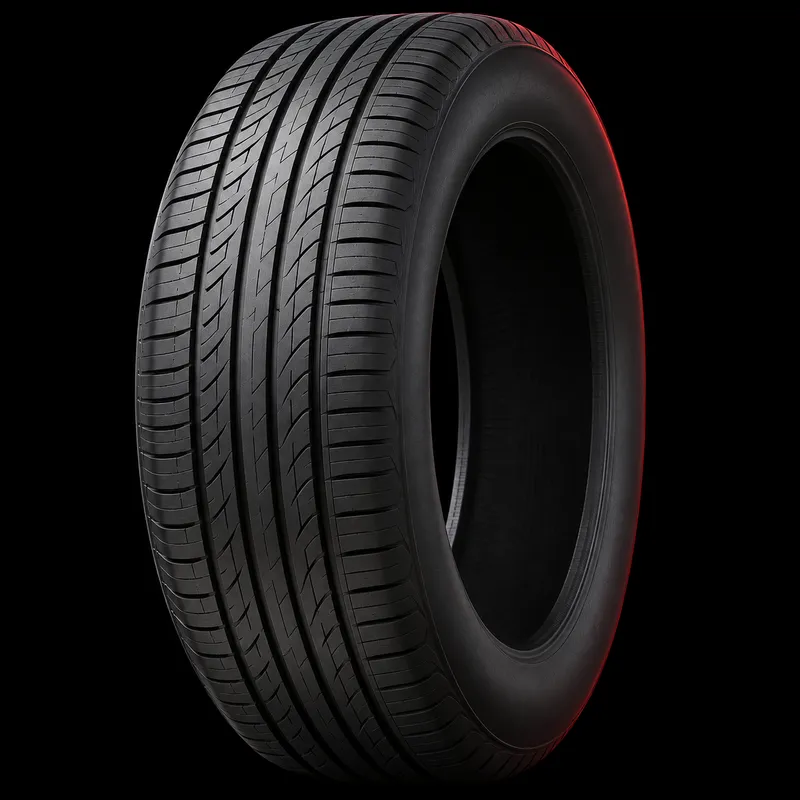
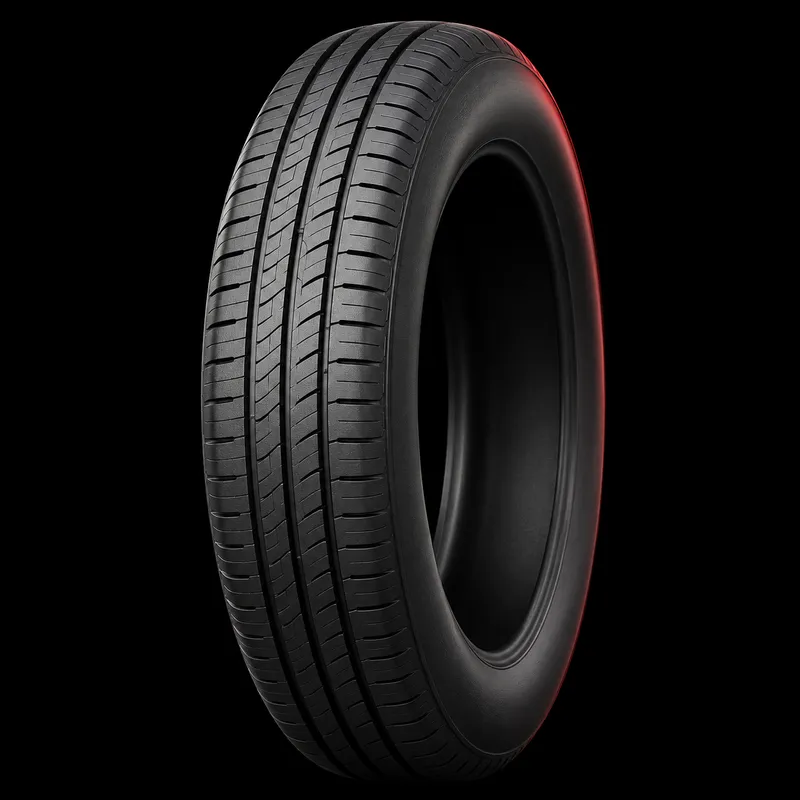
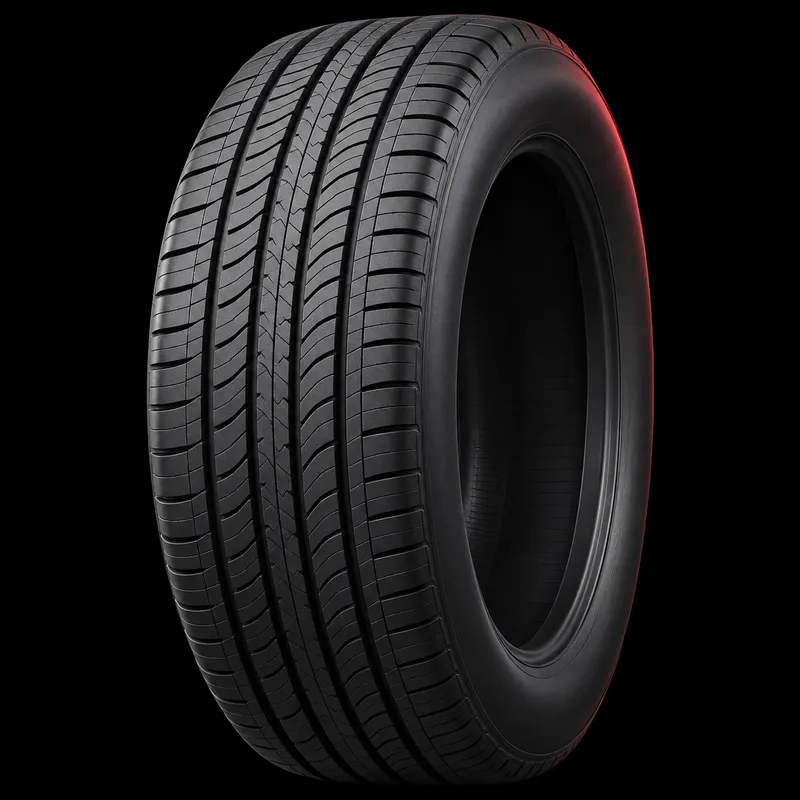
Touring tyres such as the Bridgestone Turanza 6 and the Ecopia EP150 are designed for even, slow wear on sedans like the Camry, Altima and Accord. On cars that are kept at the right pressure and aligned once a year, 50,000 km or more is a normal result.
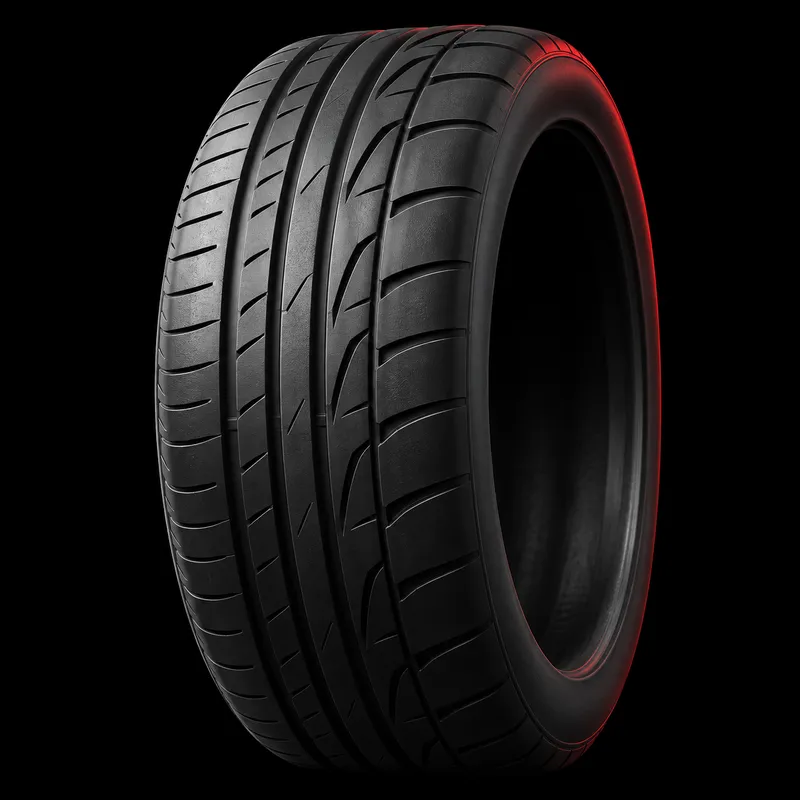
Performance tyres such as the Bridgestone Potenza Sport trade some tread life for dry and wet grip at high speed. On a BMW M340i or a Mercedes C43 driven with enthusiasm, 20,000–30,000 km is common, and rear tyres on rear-wheel-drive cars often go first.
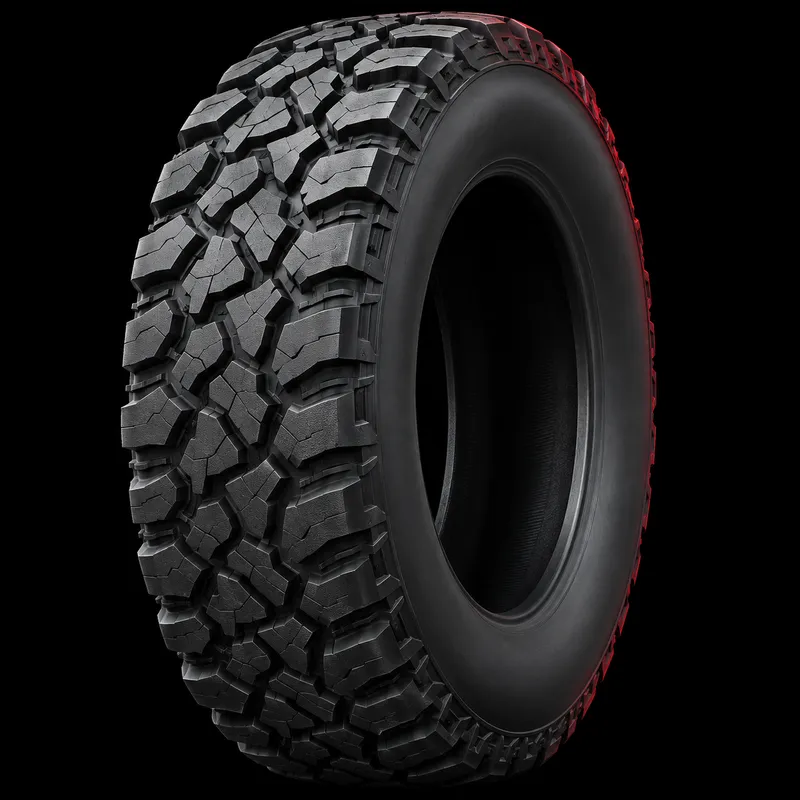
For SUVs and 4x4s, highway-terrain tyres like the Dueler H/T 684 II last longest, all-terrain patterns sit in the middle, and mud-terrain tyres wear fastest on tarmac because their large tread blocks squirm under load.
| Range and example pattern | Typical life (km) | Typical cars |
|---|---|---|
| B-Series (Techno, B250) | 35,000–60,000 | Yaris, Sunny, Accent |
| Ecopia (EP150, EP300) | 40,000–70,000 | Corolla, Elantra, hybrids |
| Turanza (Turanza 6, T005) | 40,000–70,000 | Camry, Accord, Altima |
| Potenza (Potenza Sport, S001) | 20,000–40,000 | BMW 3 Series, Mustang, Golf GTI |
| Alenza (Alenza 001) | 40,000–65,000 | Lexus RX, BMW X5, Range Rover Sport |
| Dueler H/T (684 II, 840) | 40,000–70,000 | Land Cruiser, Prado, Pajero |
| Dueler A/T (A/T 002) | 40,000–60,000 | Patrol, Hilux, Wrangler |
| Dueler M/T (M/T 674) | 30,000–50,000 | Dedicated off-road 4x4s |
Why do tyres wear faster in UAE heat?
UAE summer road surfaces reach 60–70°C, and a hot tread compound is softer, so it loses rubber faster with every kilometre. From June to September a tyre spends most of its working life near the top of its temperature range, which is not the case in milder climates where the same tyre is tested.
Heat also drives the second clock. Ultraviolet light and high temperatures break down the protective chemicals in the sidewall, which is why a car parked in an open lot in Al Barsha or Mussafah shows fine cracks years before one kept in a covered garage.
Long, fast highway runs add to the load. A drive from Dubai to Abu Dhabi on the E11 at 120–140 km/h keeps the tyres hot for over an hour, and any under-inflation turns that into extra flexing, extra heat and faster shoulder wear. It is also the pattern behind most summer failures I see, which I cover in how to prevent tyre blowouts in UAE summer.
What age limit applies regardless of tread?
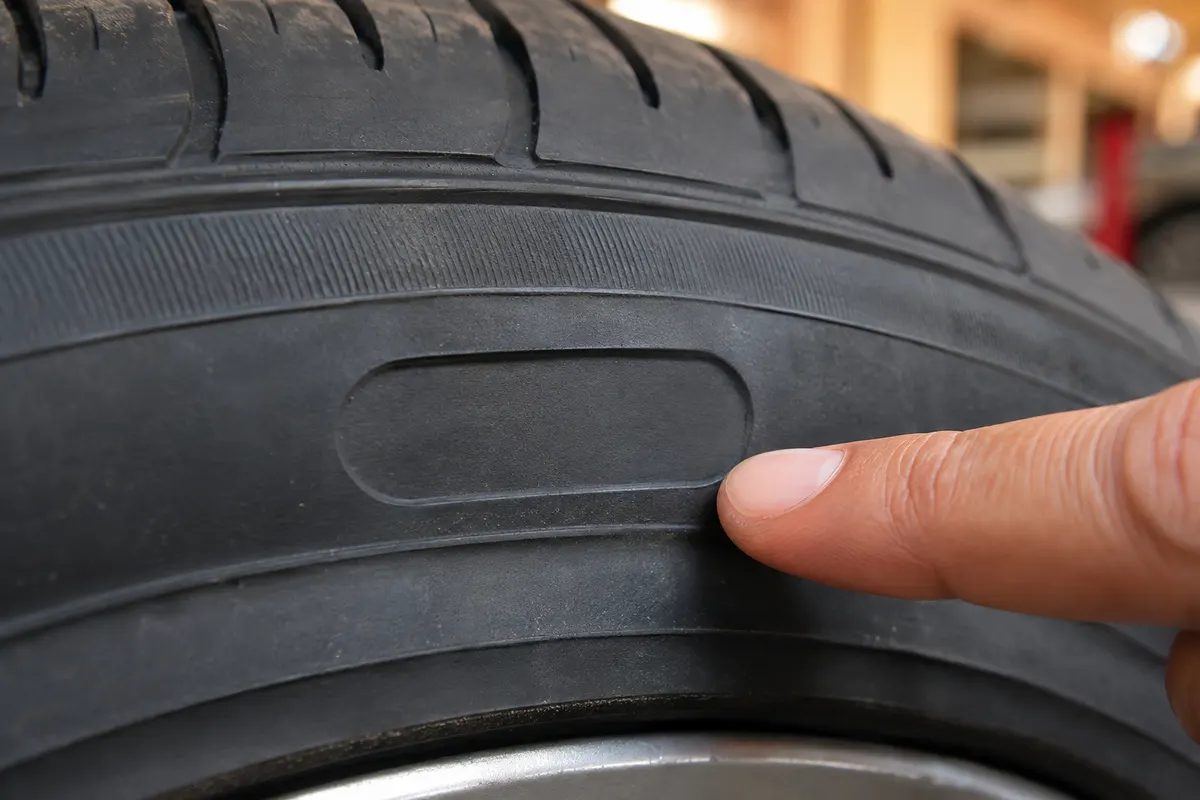
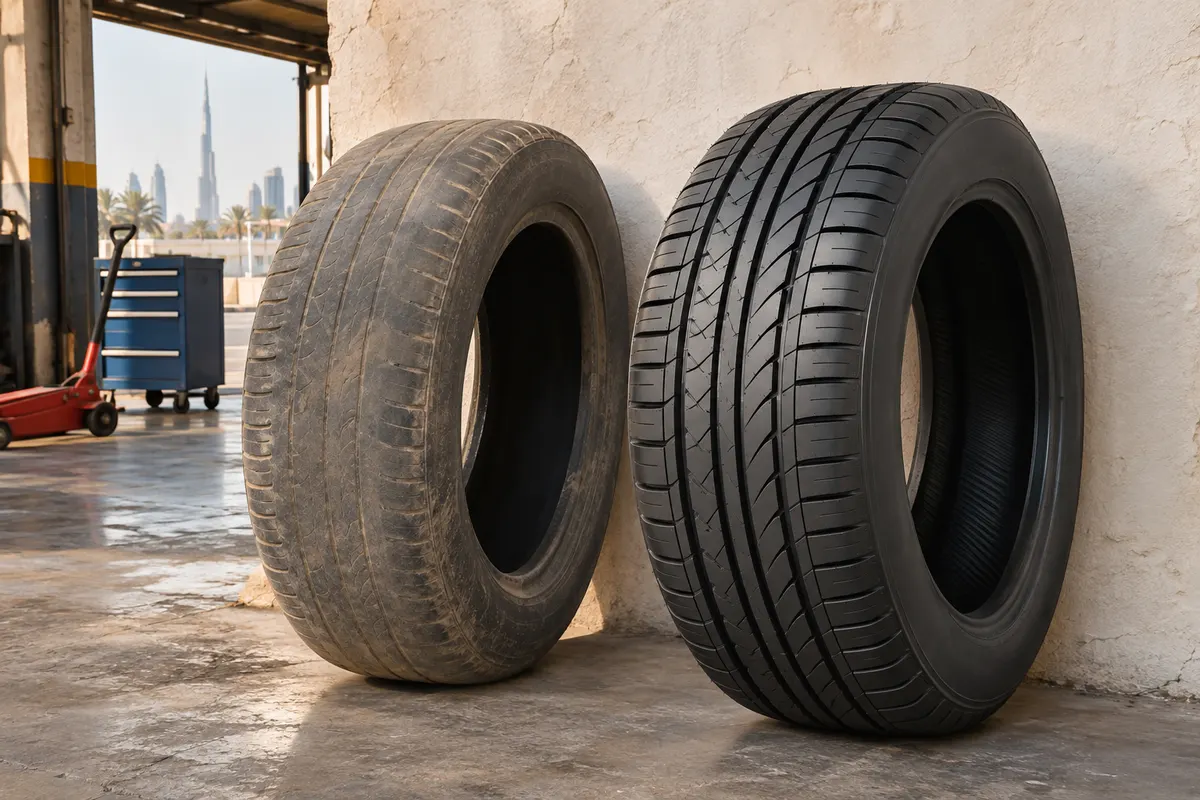
Tyres more than five years past their DOT date are commonly rejected at inspection in the UAE, so five years is the working age limit whatever the tread depth. Most tyre makers, Bridgestone among them, also advise replacing any tyre ten years after manufacture even if it looks unused.
The reason is the compound, not the pattern. An aged tyre is harder, grips less in the rare rain we get, and is more likely to crack at the base of the tread grooves. On a weekend car or a second family car that does 5,000 km a year, the tread may never reach its limit before age does.
If you are buying, ask for recent stock. A set that is already two years old on the day of fitting has used a large part of its UAE life before you have driven a metre.
Which habits shorten tyre life the most?
Running tyres under-inflated is the single most common cause of early wear I find on UAE cars. A tyre that is 5–6 PSI low flexes more, runs hotter and wears both shoulders while the centre still looks healthy. Many drivers set pressure once at a petrol station on a hot afternoon and do not check again for months.
Misalignment comes a close second. Speed bumps in villa communities, kerbs in mall car parks and potholes on older service roads all knock the geometry out over time. The sign is wear on one edge only, usually the inner edge of the front tyres, which you will not see without turning the wheel. A wheel alignment costs far less than replacing a pair of tyres 15,000 km early.
Other habits add up too:
- Hard launches from traffic lights, especially on powerful rear-wheel-drive cars
- Carrying heavy loads or towing on tyres set to the unladen pressure
- Driving on tarmac at sand pressures after a desert trip
- Never rotating, so the front tyres wear out long before the rears
- Ignoring a vibration at 100–120 km/h, which often means an unbalanced wheel
How can you make Bridgestone tyres last longer?
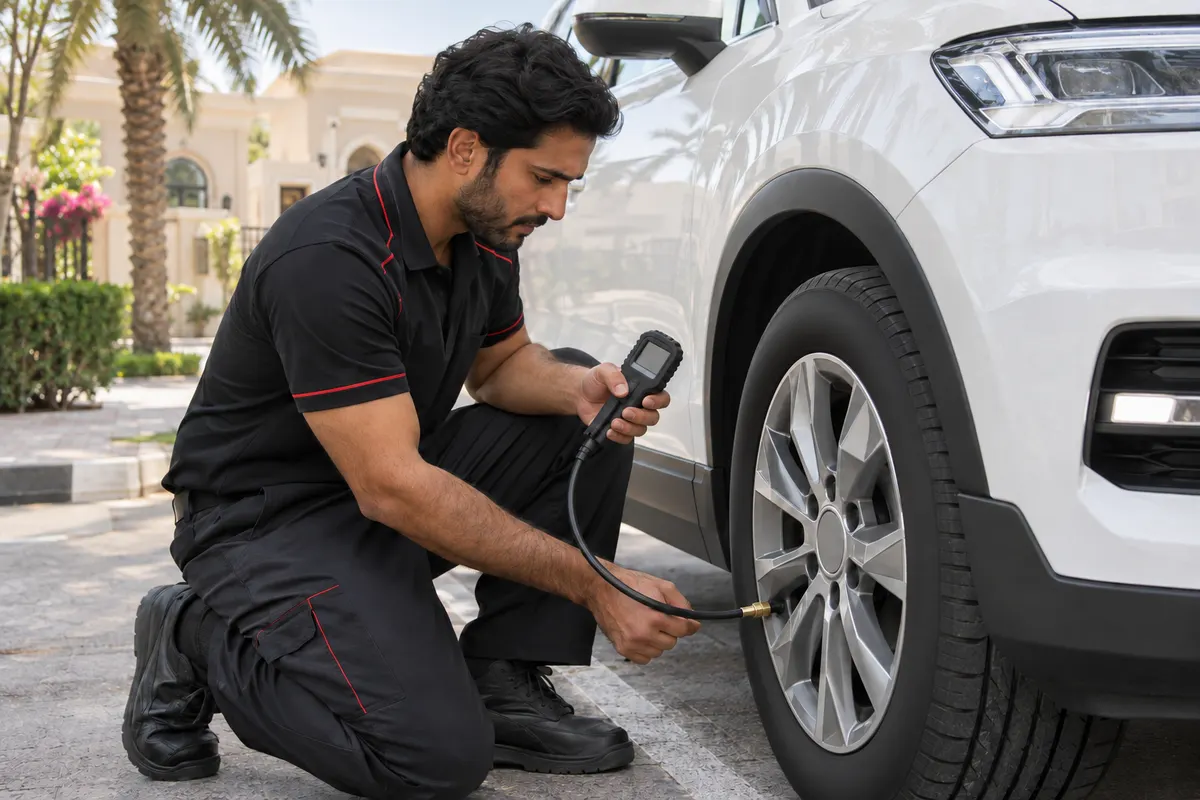
Checking pressure cold once a month is the cheapest way to add kilometres to any Bridgestone tyre. Use the figure on the driver's door placard, not the maximum printed on the sidewall, and check in the morning before the car has been driven. The full method, including summer and sand adjustments, is in the Bridgestone tyre pressure guide for the UAE.
Rotate the tyres every 10,000 km or so, front to back on most cars, so all four wear at a similar rate. Have the alignment checked once a year or after any heavy kerb strike, and have wheels re-balanced if you feel a new vibration through the steering wheel.
Shade helps more than most people expect. Parking in a covered or basement space slows sidewall cracking, and a sunshade over a driveway is worth having for a car that sits for days. If you would rather not do the checks yourself, our tyre pressure check visits from AED 100 include a nitrogen or air top-up and a look at tread and sidewalls.
Do premium Bridgestone tyres last longer than value ones?
A higher price does not automatically mean more kilometres; it usually buys more grip, comfort or quietness, and tread life depends on what the tyre was designed for. A value B-Series tyre like the B250 on a Yaris or Sunny can outlast a premium Potenza simply because its compound is harder.
Where premium ranges do earn their price is in how they age. Touring tyres such as the Turanza T005 and the Alenza 001 for SUVs tend to keep their grip and quietness more consistently as they wear down, and Ecopia tyres with ENLITEN technology are built to be lighter with lower rolling resistance, which helps fuel economy rather than tread life directly.
The best way to pick is to match the range to the car and the driving. Our guide to the best Bridgestone tyres for UAE heat walks through that choice car by car.
How do you know it is time to replace?
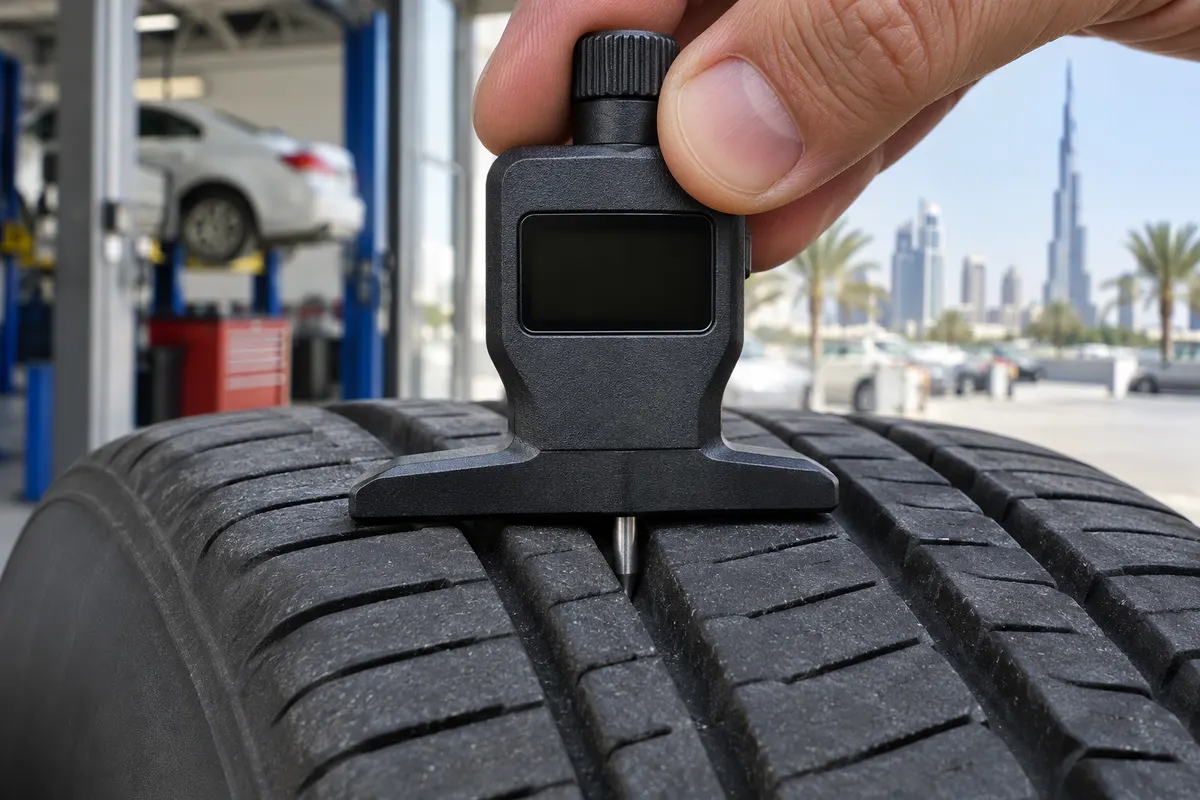
It is time to replace a tyre when the tread reaches about 3 mm, when the DOT date passes five years, or when you see cracks, bulges or exposed cords, whichever comes first. The legal minimum is 1.6 mm, but grip on a wet E311 is already noticeably lower well before that point.
I explain each sign, with photos of what to look for, in when to replace tyres in the UAE. If you are unsure, a photo of the tread and the DOT code on WhatsApp is usually enough for us to give you a straight answer.
When you are ready, we bring the tyres to you. Fitting labour starts from AED 100 per visit, tyre prices are confirmed on WhatsApp, and you can split the cost into four interest-free payments with Tabby or Tamara. Details are on our Bridgestone tyre replacement in Dubai page.