How to prevent tyre blowouts in the UAE summer, and what to do if one happens
Quick answer
Most summer tyre blowouts in the UAE come from underinflation, overloading or old tyres meeting 60–70°C road surfaces at highway speed. Check pressures cold every two weeks, replace tyres more than five years past their DOT date, respect the load index and look for sidewall bulges. If a tyre bursts, hold the wheel straight and ease off.
Key takeaways
- Underinflation is the most common cause of summer blowouts I see: check pressures cold, every two weeks, against the door placard.
- Tyres more than five years past their DOT date are commonly rejected at inspection, and the fine for unfit tyres is AED 500 and 4 black points.
- Overloading and towing raise tyre temperature; keep the load index at or above the placard.
- If a tyre bursts: hold the wheel firmly, do not brake hard, ease off the throttle, signal and stop well off the road.
- Call 999 if anyone is hurt or your car is stopped in a dangerous place.
From June to September our vans see the same pattern every year: shredded tyres on the hard shoulder of the E11 and E311, and drivers shaken after a burst at 120 km/h. Almost every one I have looked at had a reason behind it that a five-minute check would have caught.
This guide explains why tyres fail in UAE summer heat, the checks that prevent most blowouts, and what to do if one happens to you. If you want the tyre choice side, read my guide to the best Bridgestone tyres for UAE heat.
Why do tyres burst more often in the UAE summer?
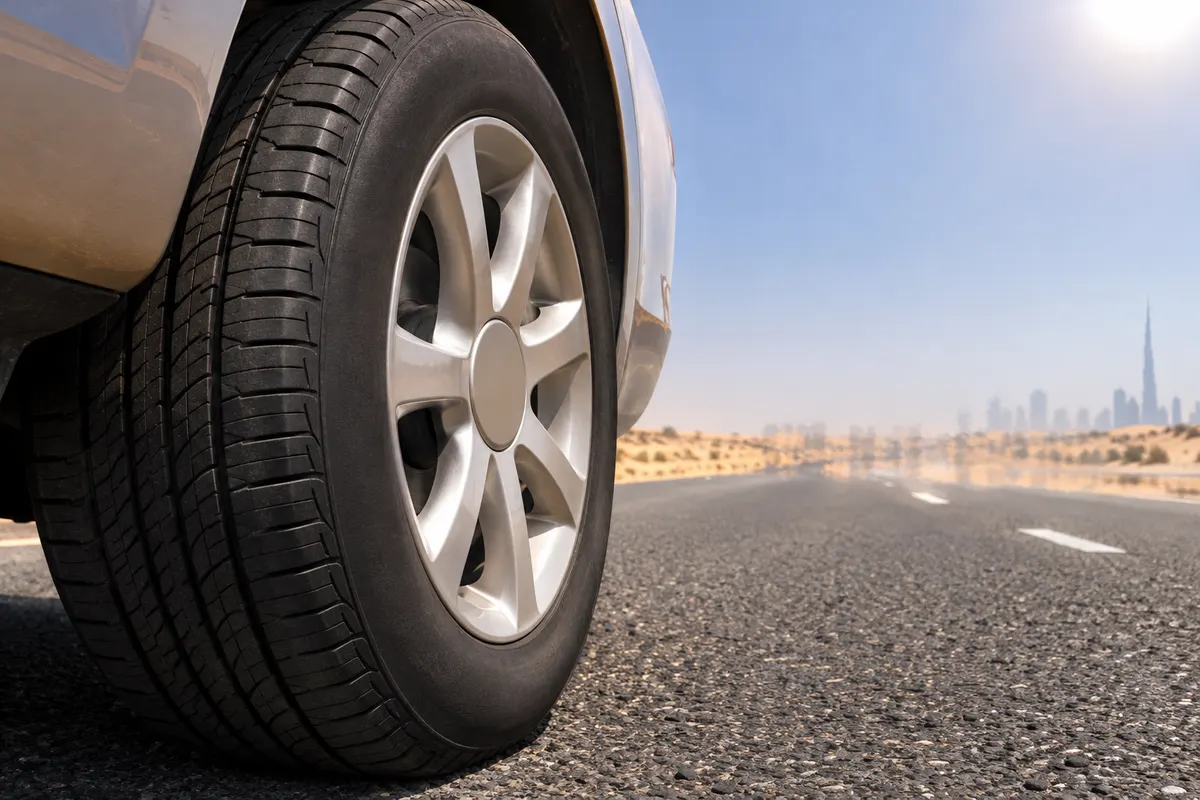
Tyres burst more often in the UAE summer because road surfaces reach 60–70°C, and that heat adds to the heat a tyre already generates as it flexes at highway speed. When a tyre is also underinflated, overloaded or old, its internal temperature can climb past the point where the rubber and steel belts stay bonded.
A blowout is rarely a sudden event from nothing. Usually the tyre has been weakening for days or weeks: running low on air, cooking on long E11 runs, or carrying damage from a pothole or kerb that slowly worsened.
The good news is that the main causes are visible and measurable. Pressure, load, age and damage can all be checked in a few minutes.
How does underinflation cause a blowout?
An underinflated tyre flexes more with every turn of the wheel, and that extra flexing turns into heat that can separate the tread from the casing. A tyre that is 20 percent low may look normal, but on a long summer drive it runs much hotter than one at the correct pressure.
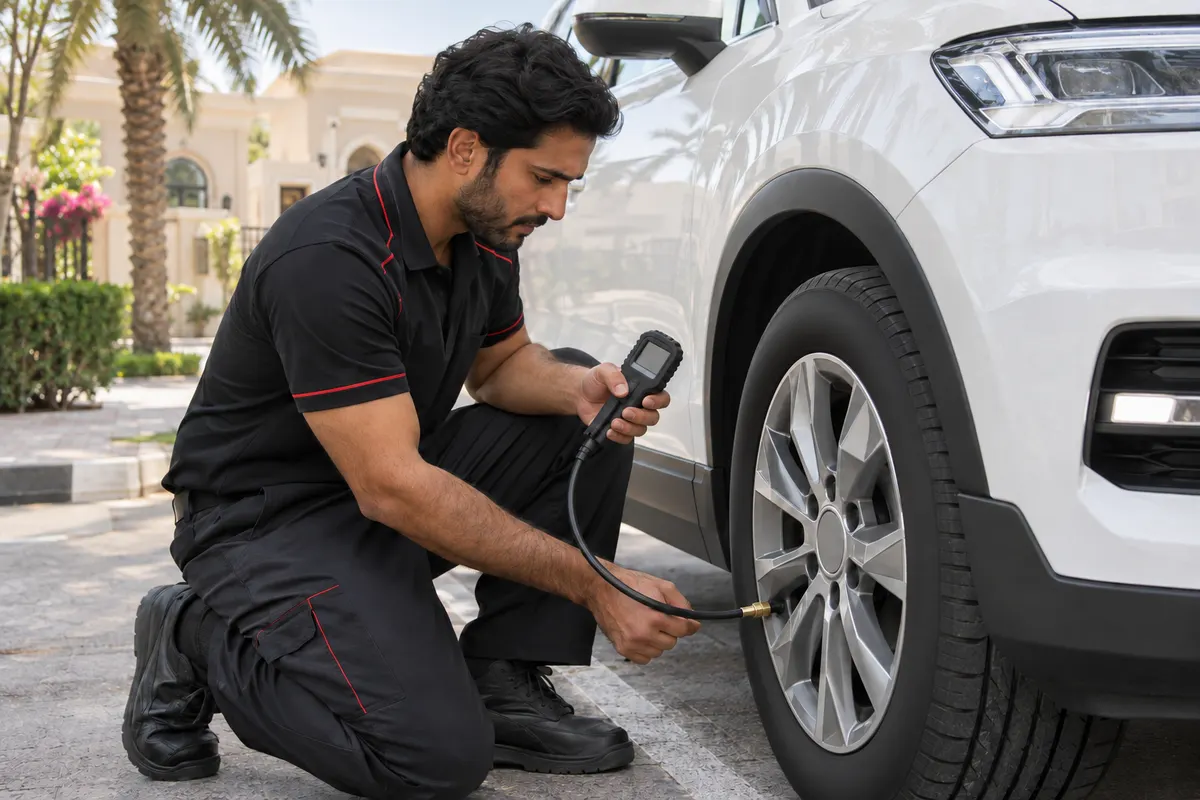
Check pressures with the tyres cold, before driving or after the car has been parked in shade for a few hours. Use the figure on the driver's door placard, not the maximum printed on the sidewall. Pressure readings taken after a hot drive will be higher and can mislead you into letting air out.
My Bridgestone tyre pressure guide for the UAE covers typical figures by vehicle type and why nitrogen does not replace regular checks.
| Check | How often | What good looks like |
|---|---|---|
| Pressure (cold) | Every two weeks and before long trips | Matches the door placard, all four equal |
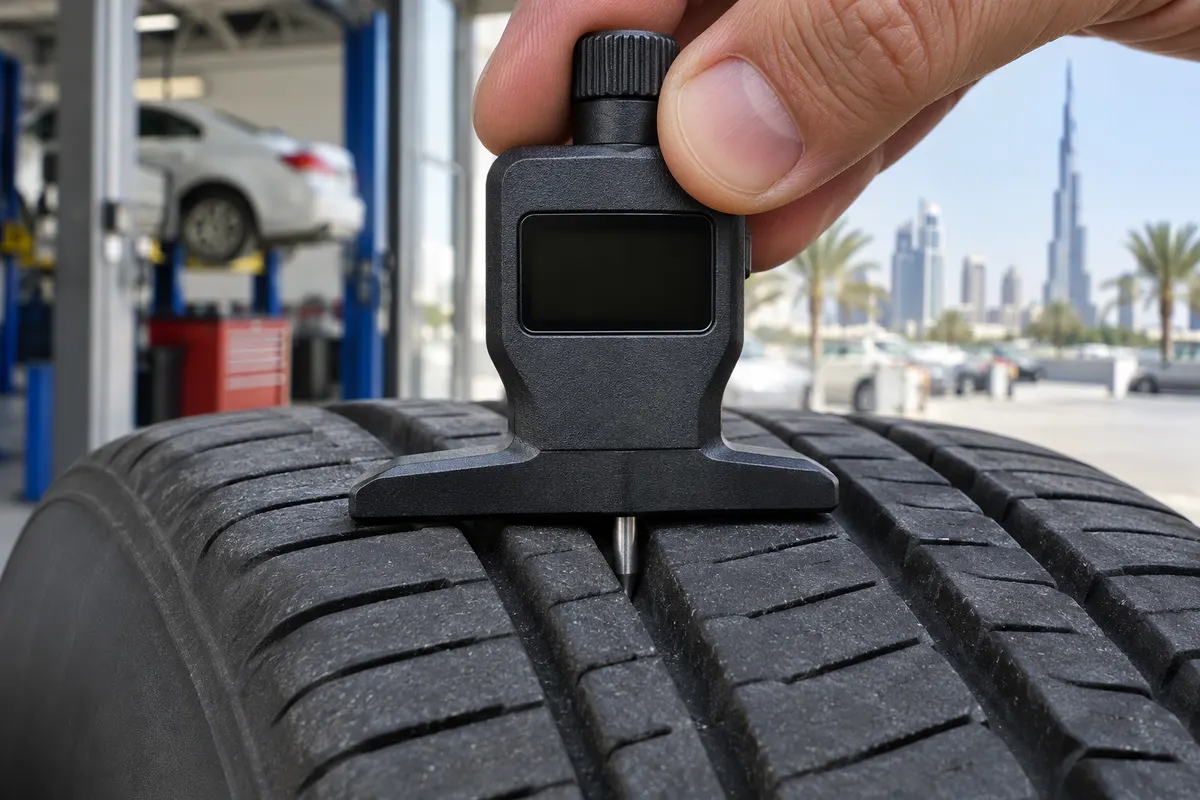
| Tread depth | Monthly | Comfortably above 1.6 mm, even across the width |
| DOT date | When buying and each summer | Under five years old |
| Sidewalls | Monthly and after kerb or pothole hits | No bulges, cuts or cracks |
| Spare tyre | Start of summer | Inflated and within age limits |
Do overloading and towing raise the risk of a tyre burst?
Yes. Every tyre has a load index that sets the maximum weight it can safely carry, and exceeding it in summer heat is one of the fastest routes to a failure. Summer holiday drives with seven people, luggage and a roof box, or a boat trailer on the way to the coast, are classic examples.
If you load the car heavily, raise pressures to the loaded figure shown on the door placard; many cars list a separate pressure for full load. Check the trailer's tyres too, as they are often old and ignored.
When buying tyres, never accept a lower load index than the placard. The Bridgestone tyre size guide shows where to find the load index and what the numbers mean.
How old is too old for a tyre in UAE heat?
Tyres more than five years past their DOT date are commonly rejected at inspection in the UAE, and heat ages rubber faster than in cooler climates. Even with plenty of tread left, an old tyre's rubber hardens and can crack, which weakens it under summer loads.
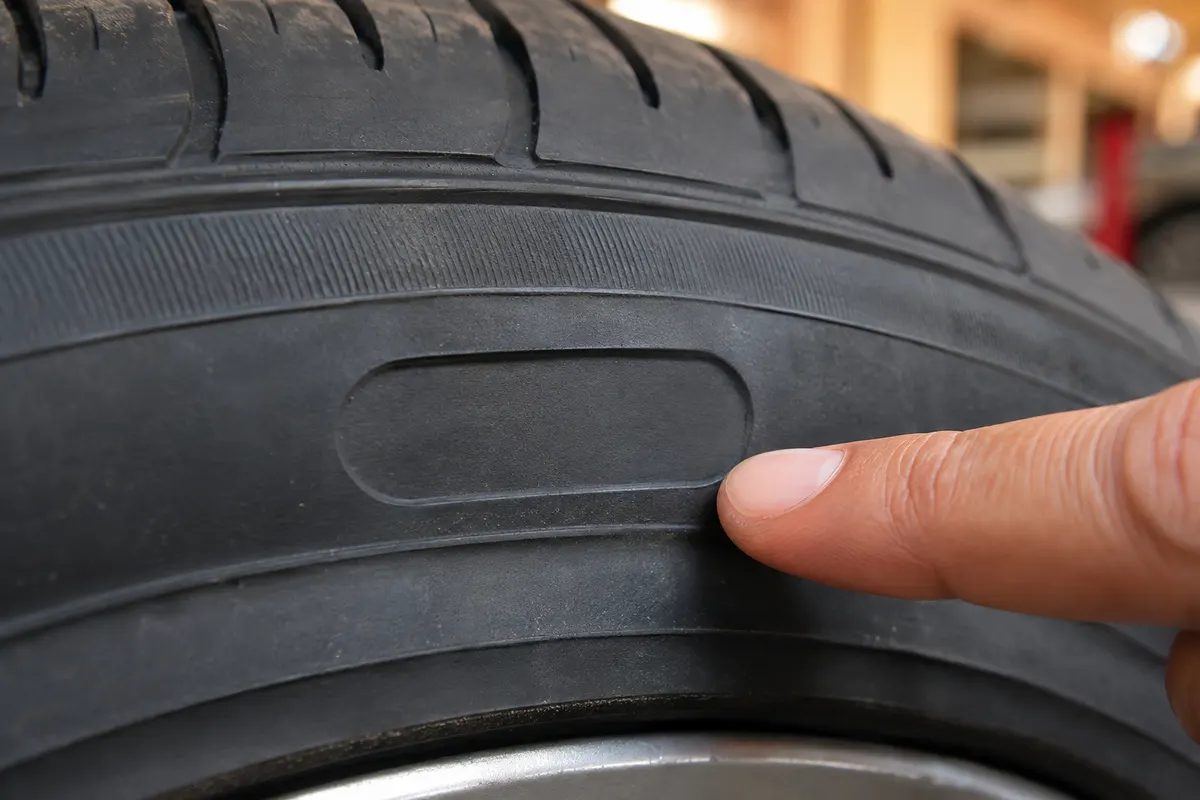
The DOT date is a four-digit code on the sidewall: week then year, so 2324 means week 23 of 2024. Spare tyres are the most overlooked; I regularly find spares that are eight or ten years old and have never touched the road. Our spare tyre service can check and replace yours.
The federal traffic fine for unfit tyres is AED 500 and 4 black points. For more on reading the code, see how to read a Bridgestone DOT date code.
What warning signs should you check before a long summer drive?
Before a long summer drive, look for bulges, cuts, cracks, exposed cords and uneven wear on every tyre, including the inner edge you cannot see without turning the wheel. A bulge on the sidewall means internal damage and the tyre must be replaced before you drive at speed.
Vibration through the steering wheel at 100–120 km/h, a car that pulls to one side, or a tyre that needs topping up every week are all signs of a problem: a slow puncture, a damaged tyre or poor alignment.
If you are unsure, a technician can check pressures, tread depth and condition at your home before the trip. Our tyre pressure check starts from AED 100 and includes a top-up.
What should you do if a tyre bursts on the E11?
If a tyre bursts on the E11 or any highway, hold the steering wheel firmly with both hands, keep the car straight and do not brake hard. Braking hard on a burst tyre can make the car swerve or roll; let the car slow down on its own first.
The car will pull towards the burst tyre. A front-tyre burst pulls the steering; a rear burst makes the back of the car feel loose. In both cases, ease off the throttle gently, switch on the hazard lights and move steadily to the hard shoulder once your speed is under control.
Stop as far from the traffic lane as you safely can, ideally beyond the hard shoulder, and get everyone out on the side away from traffic. Do not try to change a wheel inches from passing cars. Call 999 if anyone is hurt or the car is stopped in a dangerous position, and call a 24-hour tyre service once you are safe.
- Hold the wheel firmly and keep the car straight.
- Do not brake hard; ease off the throttle.
- Hazard lights on, then steer gently to the hard shoulder.
- Stop well off the road and move everyone away from traffic.
- Call 999 in an emergency.
What is on a summer tyre checklist for the UAE?
A UAE summer tyre checklist covers five things: pressure, tread depth, DOT age, visible damage and the spare. Doing it at the start of June and again before any long trip prevents most of the failures I see on the road.
If any check fails, replace the tyre before the next highway drive rather than hoping it lasts. Our guide on when to replace tyres in the UAE explains tread limits and age in more detail.
- Pressure: check cold every two weeks, set to the door placard.
- Tread: replace well before the 1.6 mm wear bars; in practice many drivers change at 3 mm.
- Age: note the DOT date; plan replacement before five years.
- Damage: look for bulges, cuts, cracks and exposed cords.
- Spare: check its pressure and age too.
Do better tyres reduce the risk of a summer blowout?
Fresh, correctly specified tyres from a major maker reduce the risk, but no tyre is safe when it is underinflated, overloaded or damaged. The most important thing a new tyre gives you is a recent DOT date, the right load index and an undamaged structure.
When we fit Bridgestone tyres, we show you the DOT date before fitting, match the load index and speed rating to your placard, balance on the van and set pressures correctly. That removes several of the common causes in one visit.
If your tyres are near the end of their life, our Bridgestone tyre replacement in Dubai service fits a new set at your home or office, usually within 30–60 minutes of booking inside city areas.